

Essays & Notes

The Other Half of Discipleship
Mike Glenn argues that true discipleship is learned through practice, not just information. Using the example of changing a tire, he explains that reading about something is very different from actually doing it. He applies this to the Christian life, noting that many churches equate discipleship with Bible classes and theological knowledge, while Jesus trained His followers by teaching them, sending them into ministry, reviewing what they experienced, and then sending them again. Mike believes churches should follow this same pattern by equipping believers to actively serve rather than simply consume teaching. His central message is that faith becomes real only when it is lived, and many of God's truths can only be fully understood through obedient action rather than classroom learning alone.

When You're Not in Control
Mike Glenn compares the life of a pastor, and really every Christian, to sailors navigating an unpredictable sea with limited control over the journey. Using the story of Captain Bligh's remarkable voyage after the Mutiny on the Bounty, he reminds readers that life is filled with circumstances beyond our control, from illness and loss to changing plans and unexpected hardships. Rather than chasing the illusion of control, believers should focus on what they can choose: aligning their lives with God's truth, grace, and love, and most importantly, trusting Christ as their Captain. His central message is that while we cannot control the storms of life, we can entrust ourselves to the One who commands the wind and waves and knows the way safely home.
What the Church Should Do...
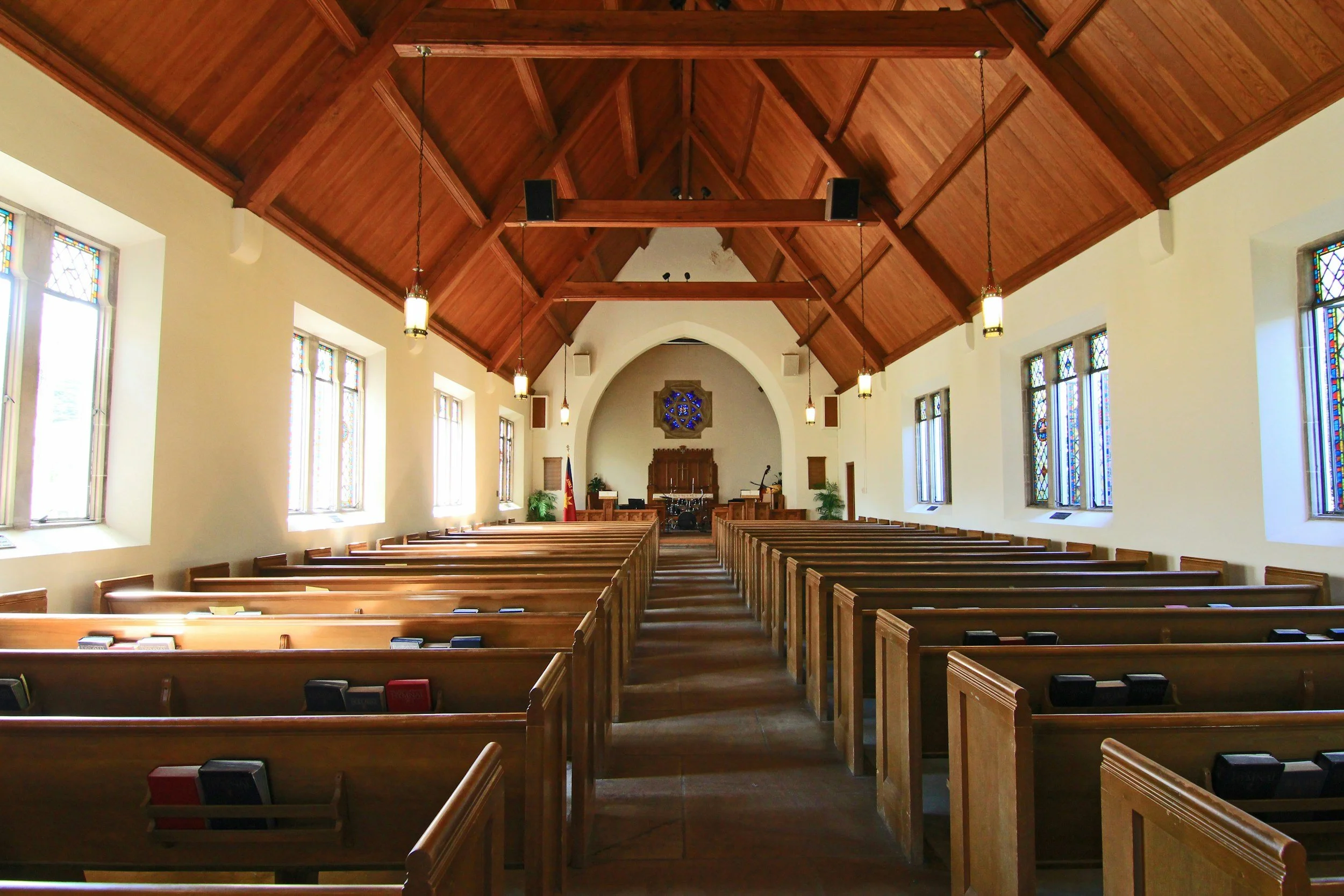
Mike Glenn challenges the common assumption that the church is an organization responsible for carrying out ministry while members simply attend. He argues that whenever people say, "The church should do something," they are really saying, "We should do something," because the church is its people, not its building or staff. Rather than waiting for pastors to launch every ministry, believers should pursue the burdens and opportunities God places on their own hearts. Mike broadens the definition of church beyond Sunday services, showing that church happens whenever Christians gather to serve, disciple, encourage, and share Christ throughout the week. His central message is that the church is at its healthiest when every believer sees themselves as an active participant in God's mission, bringing stories of God's work back into worship each Sunday.

Another Way to Praise
Mike Glenn recounts the frightening experience of temporarily losing his voice after years of overusing it in ministry. Facing the possibility that he might never preach again, he realized he had tied his identity too closely to his ability to speak. During a sleepless night of prayer, God impressed on him a deeper truth: if he could no longer preach, he would simply find another way to praise Him. Mike distinguishes between thanksgiving for what God has done and praise for who God is, emphasizing that God's worthiness never changes regardless of our circumstances. His central message is that our purpose is not defined by our abilities or roles, but by worshiping God, who remains faithful and worthy whether we stand in a pulpit, face suffering, or lose what we value most.

A Failure of Imagination
Mike Glenn uses the playful imagination of his grandchildren to illustrate a deeper spiritual truth: children naturally see possibilities where adults only see limitations. He argues that education, experience, and routine often train us to accumulate knowledge while diminishing our ability to imagine what God could do. Whether in churches, ministries, or our own lives, we become fixated on obstacles instead of opportunities. Drawing on biblical examples of God transforming ordinary people and impossible situations, Mike encourages believers to recover a Spirit-led imagination that sees potential instead of decline. His central message is that renewal begins when we stop asking what is and start asking what God could do, trusting that He is still able to accomplish far more than we can imagine.

Cracked Pots
Mike Glenn argues that debates over worship music are nothing new, noting that churches have long divided over hymns versus gospel songs, drums, choruses, and now music from Hillsong and Bethel. Rather than judging a song solely by the character or theology of those who wrote it, he points to the church's historic teaching that God can work through imperfect people, just as He has throughout Scripture. His view is that the value of a worship song lies in whether it genuinely helps believers focus on Christ. Since God consistently uses flawed messengers to proclaim His truth, Christians should avoid making perfection a prerequisite for worship. If a song leads someone to worship Jesus faithfully, they can sing it with a clear conscience, remembering that the treasure of the gospel is more important than the imperfect vessels through which it comes.

Missing My Dad
Mike Glenn reflects on the profound influence of his father, whose quiet faithfulness shaped both his understanding of Scripture and his understanding of God. Though his dad worked tirelessly to provide for his family after growing up in deep poverty, he still modeled a genuine love for God's Word, teaching Sunday School for over forty years and making the Bible a living part of everyday life. Looking back, Mike realizes his father's greatest legacy was not his success or sacrifice alone, but that he made it easy for his children to believe in a loving heavenly Father. His central message is that fathers have the sacred responsibility to reflect God's love so well that they help, rather than hinder, their children's faith, and he expresses deep gratitude that his own father left exactly that kind of legacy.

The Great Replacement
Mike Glenn argues that while it is natural to grieve the decline of churches, not every congregation is meant to last forever. Some churches close because communities change or ministries become obsolete, but many decline because they lose sight of their true mission. Rather than existing to serve the comfort of their members, churches exist to make disciples, care for their communities, and fulfill the Great Commission. His central point is that a church's life is found in its mission. When it abandons that mission, it loses its reason to exist, and God will raise up other faithful churches to carry His work forward.

The High Cost of Leadership
Mike Glenn reflects on his retirement after 32 years as senior pastor of Brentwood Baptist Church and explains that his next calling is to mentor and encourage pastors serving in an increasingly difficult ministry landscape. He points to declining trust in institutions, the lingering effects of COVID-19, and a growing shortage of pastors as major challenges facing the church. While many pastors focus on leadership strategies, budgets, and organizational management, Glenn argues they have overlooked their primary calling: to love and care for God's people. Drawing from Jesus' charge to Peter to "feed my sheep," he insists that the defining characteristic of a faithful pastor is not preaching ability or administrative skill, but a sacrificial love for the congregation they serve.

Learning the Art of Being a Pastor
Mike Glenn argues that the traditional model for training pastors is no longer sufficient for the modern church. While affirming the value of seminary education, he believes future pastors need to be formed through apprenticeships with experienced local church leaders, much like Paul trained Timothy and Titus. As technology reshapes education and Christianity becomes more like a minority movement, he envisions seminaries providing academic instruction while churches take primary responsibility for practical ministry training. His central point is that pastoring is an art learned through mentorship and real ministry experience, not just classroom education.

Houston, We Have a Problem…And Don’t We All…
Mike Glenn argues that the first step toward solving any problem is honestly admitting that it exists. Using the story of Apollo 13's famous "Houston, we have a problem" moment, he illustrates how naming a crisis mobilizes the resources needed to address it. He contrasts this with people's tendency to hide struggles behind words like "fine" or softer euphemisms that avoid reality. His central point is that growth, healing, and change begin with honest self-awareness. Once we clearly identify a problem, we can begin working toward a solution, but we cannot fix what we refuse to acknowledge.

There Will Always Be A Sermon
Mike Glenn argues that despite repeated predictions of its demise, preaching remains essential because people ultimately need truth spoken by a trustworthy witness, not just information delivered by technology. While acknowledging that AI, the internet, and changing attention spans have transformed how people consume content, he insists that technology cannot replace the need for embodied community or faithful proclamation. Drawing lessons from the pandemic and the rise of online church, he contends that people still need one another, and in a world increasingly filled with misinformation, they need someone to point them to what is true. His central point is that preaching endures because it is more than communication. It is the living witness of the gospel shared within the community of Christ.

Difference Between Easy and Simple
Mike Glenn argues that while the reasons people leave church are complex, the path back is often surprisingly simple: genuine friendship. Reflecting on research about the "dechurching" of America, he notes that many former churchgoers would return if someone took the time to know them, listen to their story, and personally invite them back. The challenge is not that this solution is complicated, but that it requires intentional effort, time, and patience. His central point is that rebuilding the church begins one relationship at a time, as believers make space in their lives to love people well without giving up on them.

Taking it Down to the Studs
Mike Glenn argues that the American church has accumulated too many programs and traditions that distract from its essential mission. Using disaster relief as a metaphor, he suggests the church needs to be stripped "back to the studs," removing everything that isn't truly necessary. Reflecting on what people actually missed during the pandemic, he identifies three essentials: worship that keeps God at the center of life, small groups that foster discipleship and authentic community, and mission that brings Christ's hope and healing into a broken world. His central point is that a simpler, more focused church would better form disciples, giving believers more time to be the church rather than constantly attending church activities.

The Next Thing We Know To Do
Mike Glenn argues that most people already know the next right thing they should do but fail to act on it. Rather than waiting for a dramatic revelation of God's will, he encourages believers to faithfully obey the small opportunities already in front of them, whether serving a neighbor, showing kindness, or meeting a practical need. Drawing on Jesus' teaching and the parable of the talents, he explains that God typically entrusts people with small responsibilities before giving them greater ones. His central point is that discovering God's will begins with simple obedience: do the next thing you know Jesus is calling you to do, and He will reveal the next step in time.

Got a Bible? Church over Coffee
Mike Glenn argues that people who have been deeply hurt by churches don't have to abandon their faith simply because they can't return to a traditional congregation. While acknowledging the real harm caused by abuse and unhealthy leadership, he suggests returning to the New Testament model: gather a small group of believers in a home, study Scripture, pray, care for one another, and serve the community. His central point is that the Church is ultimately God's people, not a building, and wherever believers gather in Jesus' name, authentic Christian community can flourish.

Deal with Your Stuff…Before it Deals with You
Mike Glenn argues that many pastors are living under unsustainable emotional pressure, comparing their inner lives to a pressure cooker ready to explode. He believes the growing demands of ministry, cultural polarization, and the lingering effects of the pandemic have pushed many pastors toward burnout. Drawing from his own 32 years in ministry, he offers practical habits for long-term health: protect your time by saying no to unnecessary commitments, prioritize rest and Sabbath, keep a handwritten journal to process thoughts and emotions, cultivate a trusted group of friends who provide honest support, and regularly meet with a counselor or therapist. His central message is that pastors must intentionally care for their own mental, emotional, and spiritual health because unresolved struggles will eventually affect their families, congregations, and ministries. Healthy leadership begins with dealing with your own "stuff" before it begins dealing with you and those you serve.

But How?
Mike Glenn argues that modern discipleship often emphasizes knowing about Jesus rather than actually following Him. Churches inspire people to pray, read Scripture, love their neighbors, and live differently, but rarely teach them how to practice those disciplines. He compares this to asking a child to do something they have never been shown how to do. True discipleship, he says, is not measured by biblical knowledge or memorization but by obedience and transformed living. Just as parents model life skills for their children, mature believers must intentionally demonstrate how to pray, study Scripture, love others, and apply Christ's teachings in everyday life. Discipleship is learned through patient coaching and imitation, with every disciple helping someone else learn to live "the Way," because genuine belief is proven by action, not merely by knowledge.

We Bear the Name
Mike Glenn argues that Christians are held to a higher standard because they bear the name of Christ. Drawing from his father's insistence that the Glenn family name carried honor and responsibility, he says the title "Christian" should shape both character and conduct. He laments that too many believers damage Christ's reputation through selfishness, hypocrisy, and a consumer mindset, causing others to reject Jesus because of His followers. True Christians recognize their own brokenness, extend grace to others, and live with humility, love, patience, and integrity. Since the world often judges Jesus by the lives of those who claim His name, believers are called to live in a way that adds honor to that name, remembering that they are "bearers of the Name" and that their lives should reflect the character of Christ.

Why Does Anyone Go to Church?
Mike Glenn reflects on retirement and the first season of his adult life when he was no longer required to attend church because of his job, leading him to ask a question he had never seriously considered: Why do I go to church? After much reflection, he concludes that he attends because Jesus has invited him into His presence, because the sanctuary offers a place of peace and worship, because he needs to express gratitude, because he needs the fellowship of other believers, and because the mission of bringing hope to the world continues long after retirement. Church is no longer an obligation for him but a joyful response to God's invitation and a reminder that following Christ is a lifelong calling.